Tilez™ - Fun Family Game
Beach Bum Ltd.Board
4.651.00 Reviews
- Version
- 2.27.602
- Installs
- 50.00K
- Age Rating
- Everyone
Screenshots
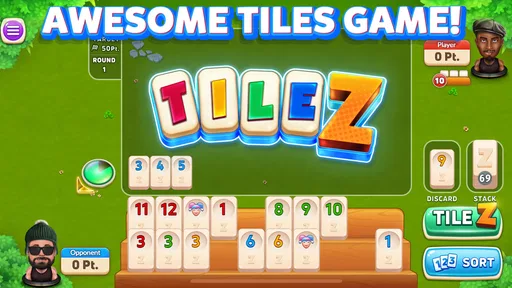
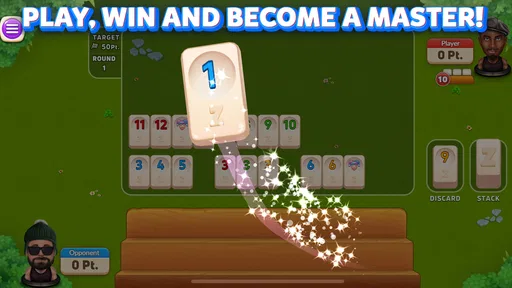
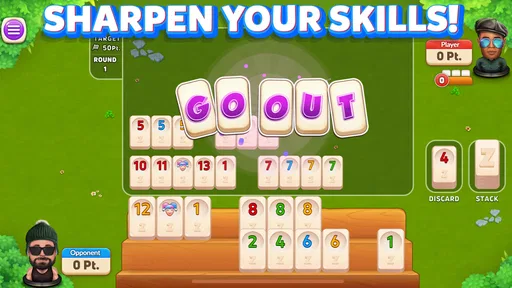
Our Review of Tilez™ - Fun Family Game
 Analysis by Appyee
Tilez™ is a free board game from Beach Bum Ltd. that turns tile matching into a compact, easy-to-understand challenge. I found it most appealing when I wanted something light enough for a short break but still active enough to make me think about my next move. The presentation is approachable, the age rating is Everyone, and the basic idea is simple: clear tiles carefully, improve your decisions, and work toward becoming more consistent at the game.
That simplicity is important because Tilez™ does not need a long explanation before you can start playing. It belongs to the kind of mobile board game that works well in small sessions, whether you are waiting for an appointment, relaxing after work, or looking for a calmer alternative to a fast action game. At the same time, it is not completely mindless. The better I understood the board, the more I noticed that careless moves could reduce my options later.
Why the first few sessions feel approachable
The early appeal comes from having a clear short-term goal. You are not asked to learn a complicated rulebook or manage a large collection of characters. Instead, the focus is on reading the tile layout and making sensible choices. That gives the first sessions a pleasant rhythm: look at the available pieces, decide which combination is safest, and see whether the board opens up in your favor.
I like this approach for casual players because the game can be understood through play rather than through a tutorial packed with instructions. Someone who already enjoys digital board games will recognize the appeal immediately, while someone who normally avoids strategy games can still begin without feeling lost. The free entry point also makes it easy to test the style before deciding whether it deserves a regular place on your phone.
The early goals are satisfying because they are close enough to feel achievable. Clearing a difficult arrangement or recovering from an awkward position gives each session a small sense of progress, even when the game is not demanding a major time commitment. That matters in this genre: if the first objective feels too distant, a casual board game quickly becomes background noise. Tilez™ generally avoids that problem by keeping attention on the board in front of you.
My practical advice is to resist playing the first available match automatically. Before tapping, I take a moment to scan for combinations that might reveal more useful tiles afterward. This small pause makes the game feel more deliberate and reduces the frustration of discovering that an apparently good move has left the board harder to manage. It is a simple habit, but it is one of the clearest ways to get more depth from the basic rules.
Progress that comes from better decisions
The most convincing progress signal is not a complicated profile screen; it is the improvement in how confidently I read a board. Early on, I tended to choose the most obvious option. With more practice, I started considering what would remain after that move and whether I was preserving enough flexibility for the next decision. That change makes the game feel more rewarding than a purely random matching exercise.
Tilez™ works best when you treat every move as part of a sequence rather than an isolated action. A match may look attractive because it is immediately available, but a slightly less obvious choice can sometimes keep more routes open. I would not describe the game as a deep strategy simulation, yet it does reward patience and visual planning. That is a useful middle ground for players who want thought without the weight of a traditional tabletop campaign.
Another useful habit is to identify the board areas that are limiting your options. If one section is blocking several potential matches, clearing it may be more valuable than taking the easiest move elsewhere. This is the kind of insight that does not appear in a short store description, but it changes the way the game feels. You stop chasing only immediate rewards and begin managing the board as a changing puzzle.
For everyday play, I found that this makes Tilez™ particularly suitable for short breaks. A quick session can still have a clear purpose: improve your opening choices, avoid wasting a useful match, or practice leaving yourself more alternatives. It is also a reasonable choice when you want a game that occupies your attention without requiring sound, a large screen, or a long uninterrupted sitting.
How the challenge develops
The difficulty curve is most interesting when the board stops giving you obvious answers. The early moves are comfortable because the available choices are easy to recognize. Later decisions become more demanding as you have to think about order, remaining space, and the consequences of removing one group before another. The challenge therefore comes less from complicated controls and more from the increasing cost of a poor decision.
I appreciate that kind of difficulty because it feels connected to player judgment. When a session goes badly, I can usually identify a moment where I acted too quickly or failed to look beyond the current match. That is more satisfying than losing because the game suddenly introduced an unrelated obstacle. It also gives practice a clear purpose: I am not merely repeating a level; I am trying to become more disciplined at reading patterns.
Still, this style will not suit everyone. Players who want a dramatic campaign, a strong narrative, or a large variety of game modes may find the board-focused format narrow. Tilez™ is built around the pleasure of solving its central puzzle, not around a broad adventure structure. If you need constant novelty, a conventional puzzle collection or a story-driven game may offer more variety.
One trade-off is that a careful player may sometimes feel that the best approach is to slow down and inspect everything before acting. That is good for improving results, but it can make the experience less relaxing if you turn every session into a performance test. I get the best balance by using two different modes of play: thoughtful sessions when I want to sharpen my decisions, and quicker sessions when I simply want a few minutes of entertainment.
What keeps a casual player returning
The retention appeal comes from the desire to do slightly better next time. A near-successful board can be enough motivation to try again, especially when the mistake feels understandable rather than arbitrary. The game encourages a cycle of observation, attempt, adjustment, and another attempt. That loop is familiar in board games, but it works well on a phone because each round can fit naturally into spare time.
I would not call the game ideal for players who need a strong sense of long-term unlocks or a large collection of permanent rewards. Its lasting appeal depends heavily on whether you enjoy refining your play. If your motivation comes from unlocking characters, building a long-term team, or following a story, this may feel too focused. If you enjoy gradually recognizing patterns and making cleaner choices, the same restraint can be a strength.
The presence of in-app purchases is worth considering before installing. Tilez™ is free to download, while individual purchases range from $0.99 to $379.99. That wide range means I would recommend checking the purchase flow carefully and setting a spending limit, particularly on a shared device. The game can be approached as a free casual title, but players who dislike any purchase pressure should remain attentive to what appears during play.
This is also where the pacing matters. A well-paced board game lets the player feel that another attempt is a personal choice, not an obligation. I prefer to stop after a few sessions if I notice myself playing only because I am chasing a result. Tilez™ is more enjoyable when the next round feels like an invitation to improve, rather than a demand to keep going. That distinction helps keep a simple game from becoming tiring.
A realistic place for it in daily life
Imagine having ten minutes before a train arrives. A competitive multiplayer game may be a poor fit because you might need to leave suddenly, while a large strategy game may take too much concentration to set up. Tilez™ fits that gap better: it gives you a focused board to examine and a small decision-making challenge without asking you to learn a complex system first.
I also see it working well during a quiet evening when you want something more engaging than scrolling but less intense than an action title. The tile format encourages attention without demanding the reflexes that many arcade games require. That makes it accessible to a broad age range, consistent with its Everyone content rating. Parents should still remember that free games with optional purchases are best used with sensible device and account settings.
For commuters or people with irregular schedules, the main advantage is flexibility. You can approach a session as a quick mental warm-up, a way to reset after a busy task, or a small personal challenge. The game is less suitable for a social group looking for a shared table experience, since its appeal is centered on individual board decisions rather than conversation or direct competition.
How it compares with familiar alternatives
Compared with classic solitaire-style apps, Tilez™ feels more focused on visual planning and the consequences of move order. Solitaire players who enjoy arranging cards and managing limited options may appreciate the same careful rhythm here, but the tile presentation gives the experience a different texture. On the other hand, someone looking for the broad rule variety of a full board-game collection will find Tilez™ more specialized.
Compared with fast match-three games, it is less about rapid tapping and more about preserving future choices. Match-three titles are often strongest when you want bright effects and immediate momentum. Tilez™ is a better fit when you want to pause, inspect the layout, and feel that your result reflects your decisions. Players who prefer constant animation and quick rewards may find its measured pace too restrained.
It also differs from competitive online board games because the pressure is mainly self-directed. You are not worrying about an opponent’s next move or waiting for another player to take a turn. That makes it easier to fit into a busy day, although it also means there is less social tension. I would choose Tilez™ for solitary practice and a traditional multiplayer board app for game nights with friends.
The developer, Beach Bum Ltd., has positioned the game in a familiar casual board space rather than presenting it as a specialist strategy title. That is a sensible identity. It keeps the entry barrier low, but it also means experienced board-game fans should approach it for quick puzzle sessions, not for the complexity of a full tabletop system.
Practical details before you install
Tilez™ is available as a free game, and its current version is 2.27.602. It runs on Android devices using version 5.0 or later, which makes it accessible to many older phones as well as newer models. The game has passed the early discovery stage with over 50K installs, and its average rating is 4.6 from 534 ratings. Those figures suggest a positive reception, while the relatively compact scale of the audience still makes it feel like a focused casual title rather than an enormous mainstream platform.
I would recommend it to someone who wants a straightforward board game with room for improved judgment, especially if short sessions matter more than a story or a large progression system. It is also a good candidate for players who enjoy spotting patterns, planning several moves ahead, and learning from a failed attempt without needing a complicated ruleset.
I would skip it if your priority is deep multiplayer competition, a rich narrative, or a progression system built around many unlockable collections. I would also be cautious if optional purchases are a major concern for you or for anyone else using the device. The free download is convenient, but responsible purchase settings are still sensible because the listed individual purchase range extends from $0.99 to $379.99.
One final tip is to judge your enjoyment by the quality of your decisions, not only by whether a board ends successfully. If you begin noticing safer openings, better tile awareness, and fewer rushed moves, the game is doing something worthwhile even before you reach a personal best. That mindset makes the pacing feel more rewarding and prevents the experience from becoming a repetitive search for immediate wins.
My verdict on the progression and pacing
Tilez™ succeeds when it stays close to its central strength: a readable board, simple goals, and enough consequence in each move to make practice meaningful. The early objectives are easy to grasp, the progress signals come from improved decision-making, and the challenge grows naturally as obvious choices become less reliable. I found that structure more engaging than a purely automatic matching game, while still being much lighter than a serious strategy title.
Its limitations are equally clear. The experience may feel narrow for players who need story, social competition, or a long list of unlocks. The optional purchase range also deserves attention, even though the game can be approached as a free download. For me, those issues do not erase the appeal; they simply define who will enjoy it most.
My recommendation is to try Tilez™ if you want a calm, compact board challenge that rewards looking ahead rather than tapping quickly. It is best viewed as a repeatable mental break: approachable at first, more thoughtful with practice, and most satisfying when you treat each session as a chance to make one better decision than the last.
Verdict
Strengths of Tilez™ - Fun Family Game
- Simple matching rules make it easy for children and adults to learn.
- Short rounds work well for quick play sessions.
- Bright tile designs make the board easy to read.
- Supports relaxed, family-friendly entertainment without complex controls.
- Strategic tile choices add depth beyond basic matching.
Limitations of Tilez™ - Fun Family Game
- Difficulty may feel limited for experienced puzzle players.
- Games can become repetitive after extended play sessions.
- Progression may offer little motivation for long-term players.
- Small screen layouts can feel cramped on some phones.
- Some features may require an internet connection or in-app purchases.
Other Releases by Beach Bum Ltd.
View All


Similar Picks in This Category
View All
Ludo King®
Gametion4.1

Ludo
Yarsa Games4.6

Tile Master® - Matching Game
Higgs Studio3.6

Checkers Online
CC Games4.6

Dominoes
Loop Games4.7

Chess
Chess Prince4.6
Frequently Asked Questions
What is Tilez™ - Fun Family Game?
Tilez™ - Fun Family Game is a casual tile-matching puzzle designed for relaxed play and family-friendly entertainment. Players typically arrange, match, or clear tiles by identifying patterns and making strategic moves. Its simple concept makes it approachable for younger players and beginners, while progressively more challenging levels can keep experienced puzzle fans engaged.
Is Tilez™ suitable for children and family play?
Tilez™ is presented as a family-oriented game, making it suitable for shared play across different age groups. The rules are generally easy to understand, with no need for advanced gaming experience. Parents should still review the game’s age rating, advertising settings, in-app purchase options, and privacy information before allowing children to play independently.
Can Tilez™ be played offline?
Whether Tilez™ works completely offline may depend on the specific version installed and the feature being used. Basic gameplay may be available without a continuous internet connection, but advertisements, updates, online rankings, cloud saves, or other connected features can require access to the internet. Check the store listing and test the game in offline mode after installation.
Does Tilez™ contain advertisements or in-app purchases?
Tilez™ may use optional purchases or advertising as part of its monetization model, depending on the platform and current release. Ads can sometimes appear between levels or when players request bonuses, while purchases may unlock extra content or remove advertising. Before downloading, review the store’s payment details and configure parental controls if children use the device.
Is Tilez™ free to download, and what devices support it?
Tilez™ may be available as a free download, although some features, content, or convenience options could require payment. Compatibility depends on the operating system, device model, available storage, and minimum software version supported by the developer. Always use the official Google Play or Apple App Store listing to confirm the current price, requirements, and supported devices.
Play our best games!


